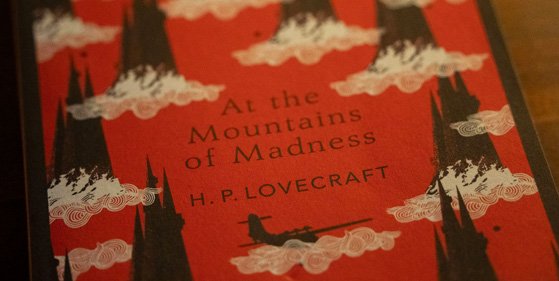







Without a doubt, when it comes to crafting tales of horror—H.P. Lovecraft stands tall as the dark architect of the abyss. What's most intriguing is how this self-educated individual, who lived in his birthplace nearly all his life—often writing by candlelight and existing on a diet of mostly beans and coffee—could shape stories that transcend the collective imagination of scholars and adventurers alike. Indeed, Lovecraft was a man of contradictions; while he rarely traveled, he was one of the most prolific letter-writers in history, penning an estimated 100,000 letters that acted as his own personal window to the world. This brings us to the very heart of writing, for Lovecraft single-handedly proves that at its core, writing is envisioning—seeing the unseen through the lens of the mind. It is through these eyes that we are given one of his most hauntingly beautiful novellas, At the Mountains of Madness.
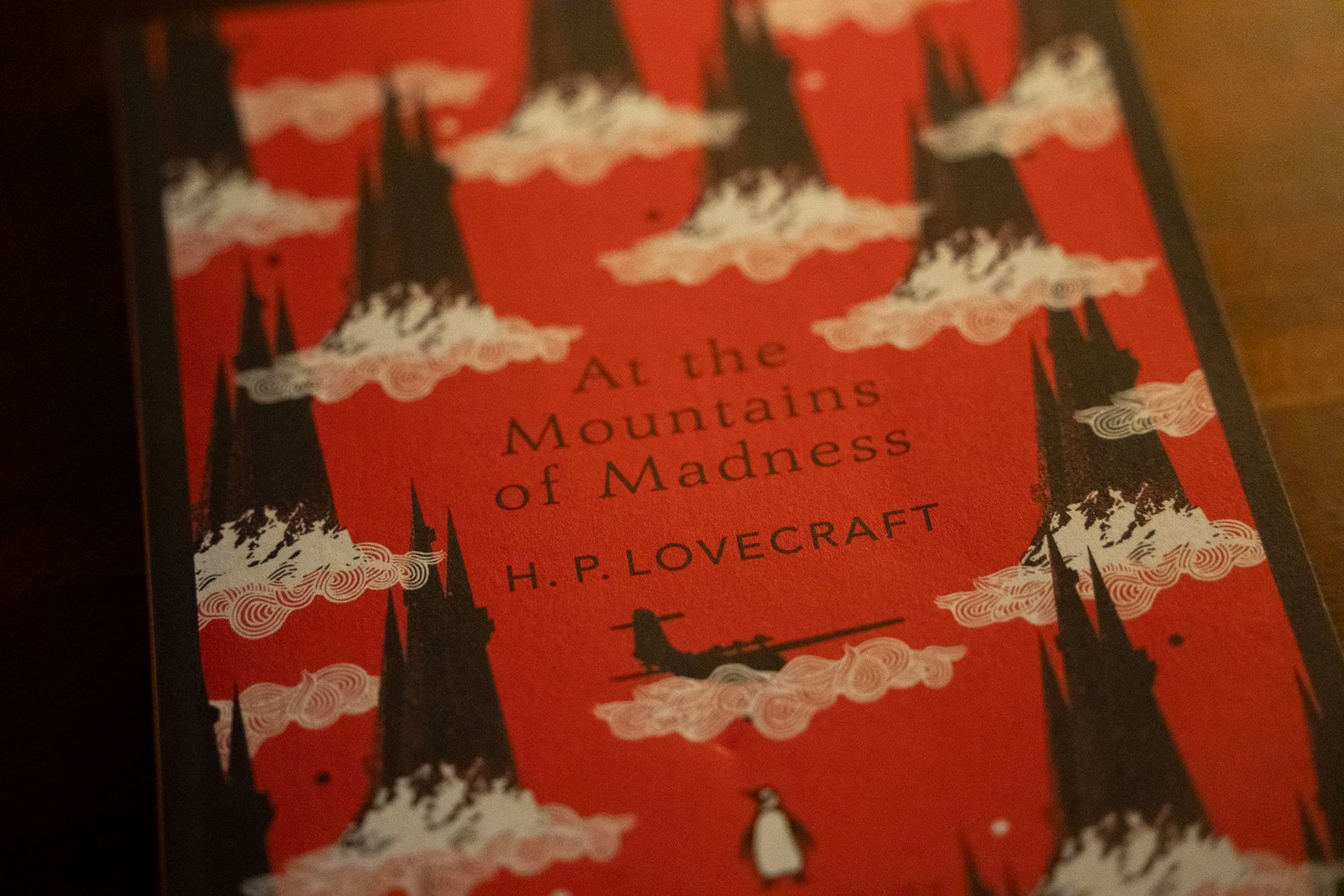
Written in February–March 1931 and published in three installments in 1936
It is a firsthand account of an expedition to Antarctica during the dawn of the 20th century, recounted by one survivor who made it back alive—a tale that serves as a stark warning for future endeavors. This expedition was comprised of scientists, explorers, and scholars; it sets the stage, a portal to a world from another age, one millions of years old. Lovecraft’s fascination with the Antarctic was not accidental; he was deeply moved by the real-world disappearance of the explorer Sir Ernest Shackleton’s ship, Endurance, only years prior. And along with its discoveries come horrors—some shared, some experienced intimately. Interestingly, Lovecraft’s descriptions of the cyclopean ruins were inspired by his own vivid night terrors, a lifelong affliction where he felt "night-gaunts" would snatch him up and carry him into the void.
Lovecraft single-handedly proves that at its core, writing is envisioning—seeing the unseen through the lens of the mind.

Written during the twilight of mankind's Age of Adventure, when the planet was nearing complete cartography through technological advancements, this tale captures the last gasp of untamed exploration. It is here that the subjects held within Lovecraft’s mental library stretch to their limits, building a world rich with domain-specific knowledge drawn from archaeology, science, biology, and geology. This scientific grounding was no accident; Lovecraft was so obsessed with astronomy that he nearly pursued it professionally before his nerves—and his math skills—failed him.
In a stroke of irony that the author himself might have found "cosmic," the very mountains he described—the Miskatonic Range—actually mirror the height and scale of the Gamburtsev Subglacial Mountains, which were not actually discovered by real scientists until 1958. This mythically tactical approach to storytelling, fused with the characters' inherent fears and vulnerabilities, grips you with a depth and breadth of insight that brings this cosmic horror to life—a horror you can see, breathe, hear, and touch as you turn the pages.
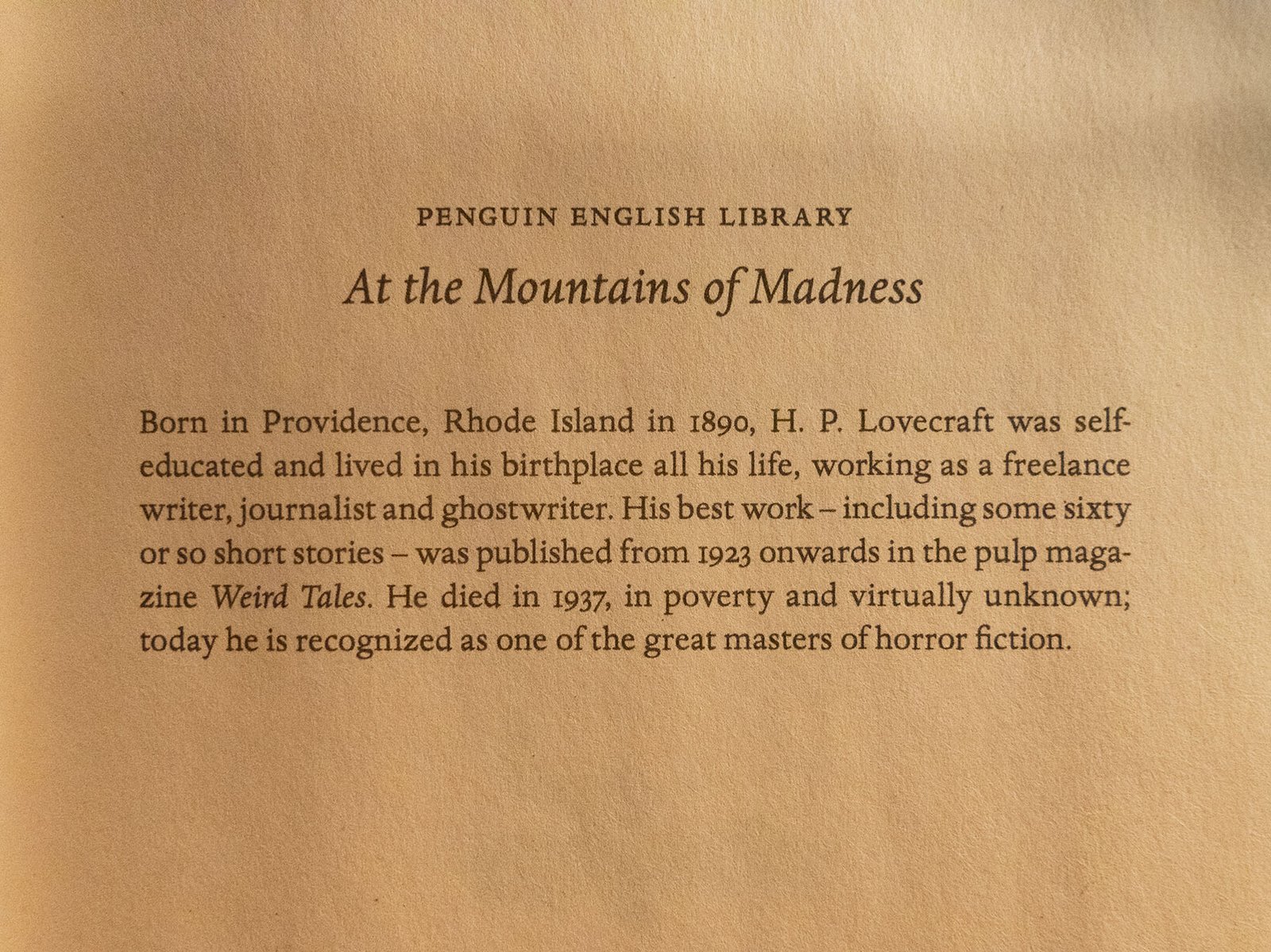
H P Lovecraft; August 20, 1890 – March 15, 1937
The world-building is a masterclass in seamlessly blending historical spaces and events with the fictional landscape that erupts from this mad genius.
On the sentence level, Lovecraft is truly a genre unto himself. Each sentence carries his distinct voice and signature. He famously favored "adjectivitis" or "adjectival horror," piling descriptions like "eldritch," "cyclopean," and "squamous" to illustrate the limits of human language and describe things precisely because they defied it. It takes you on a literary voyage from the first word; one that makes you feel this narrative exists in its own "time." The sentences breathe, expand, and reward your investment as a reader, guiding you through a labyrinthine prose, each turn revealing a hidden gem.
The world-building is a masterclass in seamlessly blending historical spaces and events with the fictional landscape that erupts from this mad genius. This novella lays the foundation of Lovecraft's cosmic creation, its mythology—a lore that has inspired generations of writers, artists, and storytellers. Even the "Great Old Ones" found their way into modern pop culture in the most unexpected places, influencing everything from the visual design of Ridley Scott’s Alien to the psychological dread of Stephen King’s novels. It is a profound irony that At the Mountains of Madness was originally rejected by Weird Tales for being "too long," only to become the cornerstone of modern science-fiction horror.
Such is the legacy of H.P. Lovecraft, who began his career writing for pulp magazines and lived a life of relative obscurity. Yet, through his work, we are left with an imagination that, much like his Cthulhu and Elder Gods characters, has endured the test of time. A fitting beginning to an end, and such is also the case with At the Mountains of Madness. The novella concludes with the chilling phrase "Tekeli-li," which entwines Lovecraft's legacy with Edgar Allan Poe's The Narrative of Arthur Gordon Pym of Nantucket. This phrase acts as a bridge, connecting two titans of horror across the centuries.
"Tekeli-li! Tekeli-li!"