





I believe it's called "Post-Book Syndrome" —that peculiar resonance that lingers in the mind long after the final chapter. It is the echo of voices once heard, the distinct personas of the characters, and the atmosphere of a world where you lived and breathed alongside them. As you reach the closing pages and their prose, you are reminded not only of the shared journey but also of the bittersweet mortality that animates that realm and its inhabitants.
Stephen King is no stranger to such mystical prose; in fact, he is one of the few authors who consciously practice it via the "act of least effort." Thus far, this philosophy has done wonders for him and the literary community alike. And why not? If a writer craves a sense of exploration while crafting a narrative, that passion reflects in the work and the ink.
Furthermore, Mr. King is notorious for never knowing the conclusion of his work when he begins. To him, writing is an act of discovery led by the characters themselves—a process no different than granting free will to the silhouettes of your imagination.
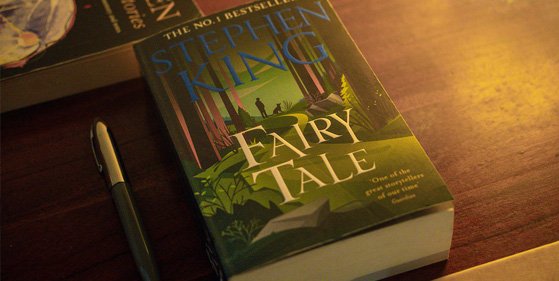
Faërie Stories & Fairy Tale - Pic by Kshitij
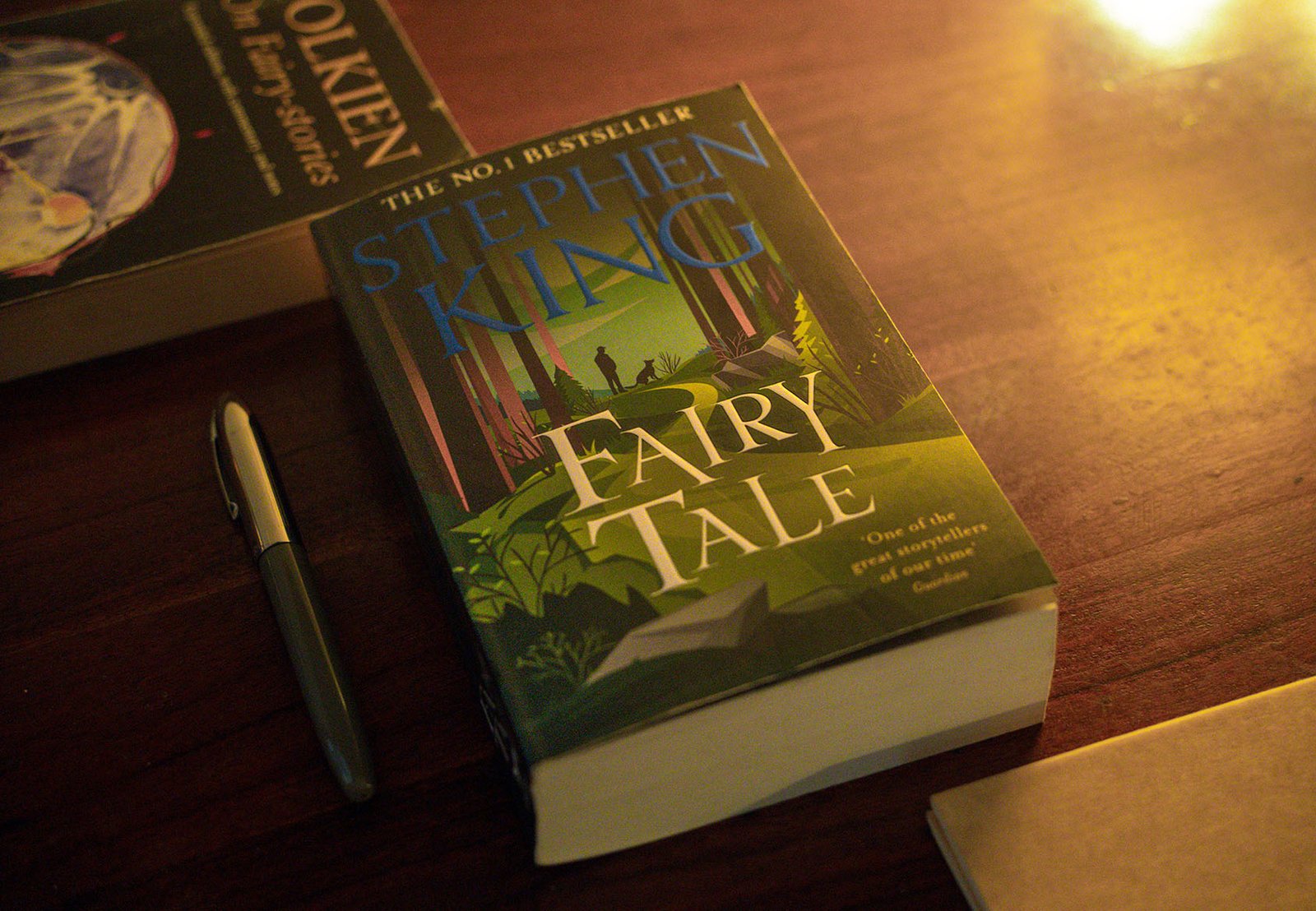
As for this specific volume, Fairy Tale, did he know the resolution from the start, or—as with most of his novels—did he uncover it along the way? Did he intentionally choose the title from the beginning, or only after reaching the finale? I’ll leave that for you to decide. One thing is certain: it captures the essence of a "Kid in Perilous Land," as Tolkien described "Faërie" in his 1947 essay. Composed during the pandemic when the world desperately sought escapism, this tale is unapologetic in its magical intent.

Writing is an act of discovery led by the characters themselves—a process no different than granting free will to the silhouettes of your imagination.
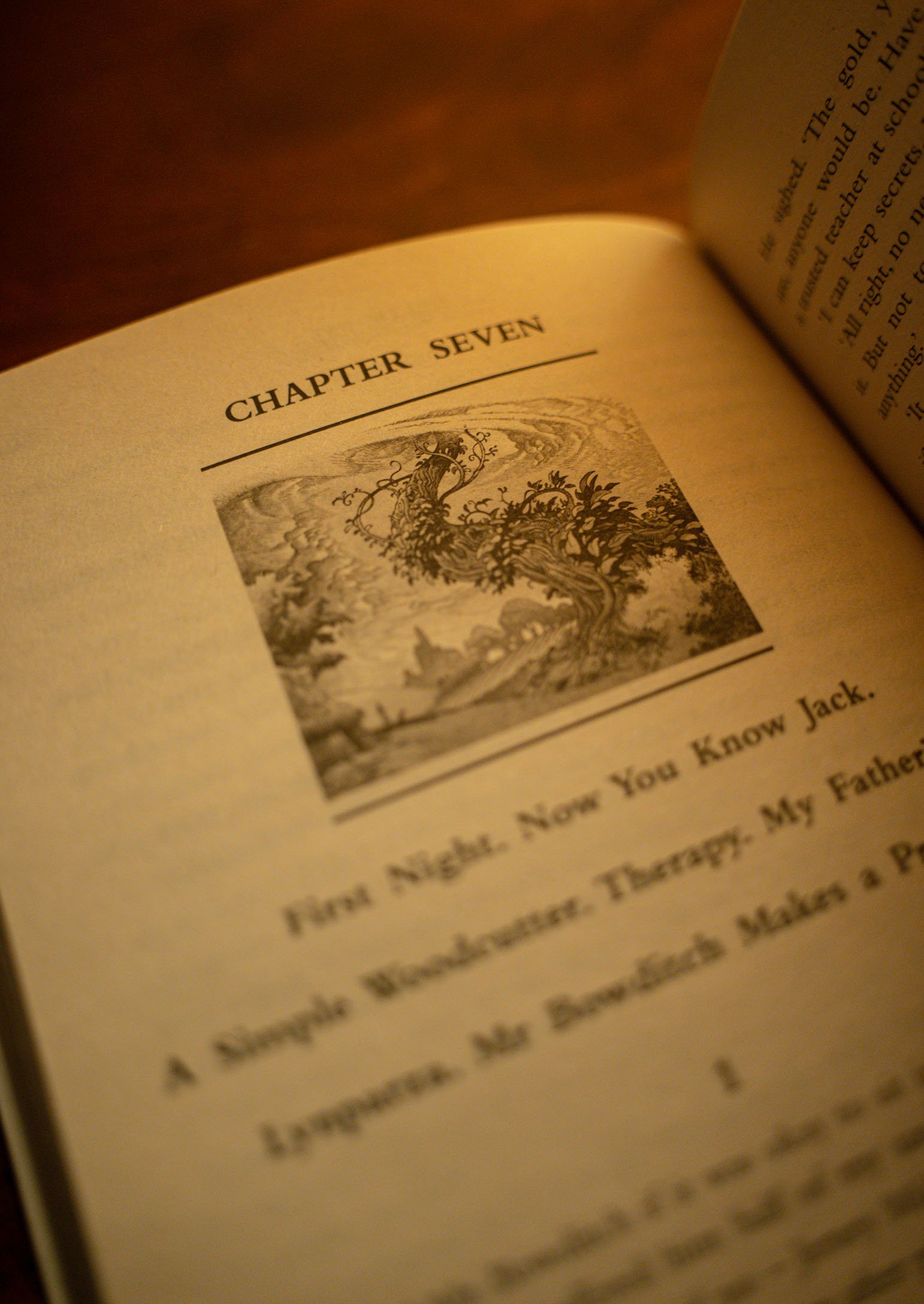
Escape into the Unknown
The narrative follows Charlie, a boy battling his past and struggling to form a hopeful outlook, who accidentally stumbles upon a secret passage into a mystical realm. Along this path, he meets a cast of figures vividly painted onto a canvas-like world—a place that, at every turn, evokes the classic fables of old. It is a heartfelt homage, evident from the very first pages.
On this quest, he is accompanied by a dog named Radar, a companion he has recently befriended. Radar receives a character arc so well-defined and justified that it would make the protagonists of other legends green with envy.
Structurally, the plot adheres to an elaborate three-act framework. The opening segment focuses on the real world and the discovery of the fantastic, while the remaining sections are set entirely within this newfound territory. With every page, Charlie moves closer to a resolution, and with every step, the stakes and the costs of his odyssey rise. The story peels back the rusted layers of the protagonist's history to forge something new, beautifully captured in the line: Tempus Est Umbra In Mente—"Time is a shadow in the mind."
As this strange land reveals more of itself, Charlie feels increasingly at home in the unknown. This is where Fairy Tale truly shines. As you approach the concluding chapters, you are reminded of the farewell that awaits. A world that felt more tangible than reality, if only for a few days, finally closes its doors—yet it stays with you long after the closing.
Such is the alchemy of great storytelling.